Appearance
什么是 Pinia 呢?
Pinia(发音为/pi:njʌ/,如英语中的“peenya”)是最接近 piña(西班牙语中的菠萝)的词;
Pinia 开始于大概 2019 年,最初是作为一个实验为 Vue 重新设计状态管理,让它用起来像组合式 API(Composition API)。
从那时到现在,最初的设计原则依然是相同的,并且目前同时兼容 Vue2、Vue3,也并不要求你使用 Composition API;
Pinia 本质上依然是一个状态管理的库,用于跨组件、页面进行状态共享(这点和 Vuex、Redux 一样);
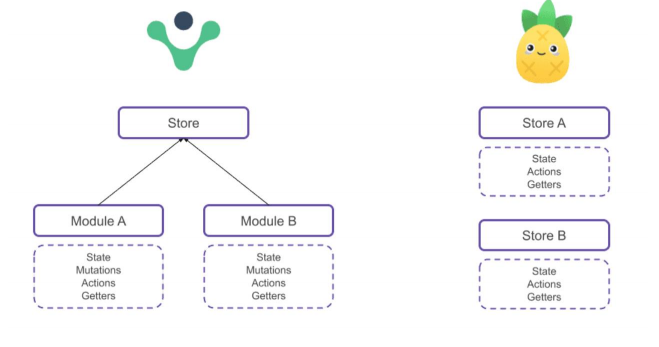
Pinia 和 Vuex 的区别
那么我们不是已经有 Vuex 了吗?为什么还要用 Pinia 呢?
Pinia 最初是为了探索 Vuex 的下一次迭代会是什么样子,结合了 Vuex 5 核心团队讨论中的许多想法;
最终,团队意识到 Pinia 已经实现了 Vuex5 中大部分内容,所以最终决定用 Pinia 来替代 Vuex;
与 Vuex 相比,Pinia 提供了一个更简单的 API,具有更少的仪式,提供了 Composition-API 风格的 API;
最重要的是,在与 TypeScript 一起使用时具有可靠的类型推断支持;
和 Vuex 相比,Pinia 有很多的优势:
比如mutations 不再存在:
他们经常被认为是 非常 冗长;
他们最初带来了 devtools 集成,但这不再是问题;
更友好的 TypeScript 支持,Vuex 之前对 TS 的支持很不友好;
不再有 modules 的嵌套结构:
你可以灵活使用每一个 store,它们是通过扁平化的方式来相互使用的;
也不再有命名空间的概念,不需要记住它们的复杂关系;
如何使用 Pinia?
使用 Pinia 之前,我们需要先对其进行安装:
javascript
yarn add pinia
## or with npm
npm install pinia
创建一个 pinia 并且将其传递给应用程序:
stores/index.js
javascript
import { createPinia } from "pinia";

const pinia = createPinia();

export default pinia;
main.js
javascript
import { createApp } from "vue";
import App from "./App.vue";
import pinia from "./stores";

createApp(App).use(pinia).mount("#app");
认识 Store
什么是 Store?
一个 Store (如 Pinia)是一个实体,它会持有为绑定到你组件树的状态和业务逻辑,也就是保存了全局的状态;
它有点像始终存在,并且每个人都可以读取和写入的组件;
你可以在你的应用程序中定义任意数量的 Store 来管理你的状态;
Store 有三个核心概念:
state、getters、actions;
等同于组件的 data、computed、methods;
一旦 store 被实例化,你就可以直接在 store 上访问 state、getters 和 actions 中定义的任何属性;
定义一个 Store
定义一个 Store:
我们需要知道 Store 是使用 defineStore() 定义的,
并且它需要一个唯一名称,作为第一个参数传递;
这个 name,也称为 id,是必要的,Pinia 使用它来将 store 连接到 devtools。
返回的函数统一使用 useX 作为命名方案,这是约定的规范;
stores/counter.js
javascript
// 定义关于counter的store
import { defineStore } from "pinia";

const useCounter = defineStore("counter", {
  // counter是id
  state: () => ({
    count: 99,
  }),
});

export default useCounter;
使用定义的 Store
Store 在它被使用之前是不会创建的,我们可以通过调用 use 函数来使用 Store:
javascript
<template>
  <div class="home">
    <h2>Home View</h2>
    <h2>count: {{ counterStore.count }}</h2>
  </div>
</template>

<script setup>
  import useCounter from '@/stores/counter';

  const counterStore = useCounter()
</script>

<style scoped>
</style>
注意 Store 获取到后不能被解构,那么会失去响应式:
为了从 Store 中提取属性同时保持其响应式,您需要使用 storeToRefs()。
javascript
<template>
  <div class="home">
    <h2>Home View</h2>
    <h2>count: {{ counterStore.count }}</h2>
    <h2>count: {{ count }}</h2>
    <button @click="incrementCount">count+1</button>
  </div>
</template>

<script setup>
  import { toRefs } from 'vue'
  import { storeToRefs } from 'pinia'
  import useCounter from '@/stores/counter';

  const counterStore = useCounter()

  // const { count } = counterStore // 不是响应式的
  // const { count } = toRefs(counterStore) // 是响应式的
  const { count } = storeToRefs(counterStore) // 是响应式的


  function incrementCount() {
    counterStore.count++
  }

</script>

<style scoped>
</style>
认识和定义 State
state 是 store 的核心部分,因为 store 是用来帮助我们管理状态的。
在 Pinia 中,状态被定义为返回初始状态的函数;
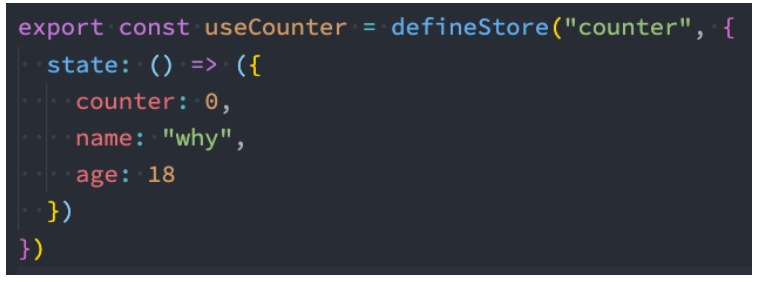
操作 State(一)
读取和写入 state:
默认情况下,您可以通过 store 实例访问状态来直接读取和写入状态;
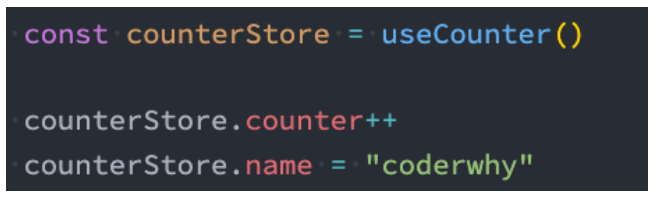
重置 State:
你可以通过调用 store 上的 $reset() 方法将状态 重置 到其初始值;

操作 State(二)
改变 State:
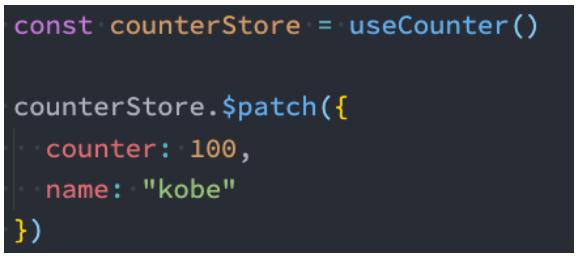
除了直接用 store.counter++ 修改 store,你还可以调用 $patch 方法;
它允许您使用部分“state”对象同时应用多个更改;
替换 State:
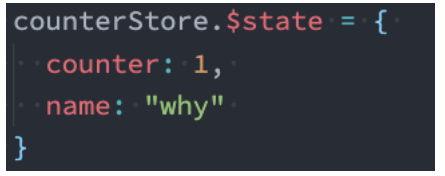
您可以通过将其 $state 属性设置为新对象来替换 Store 的整个状态:
但是,原先有的属性,新对象没有的属性还是会被保留下来
javascript
<template>
  <div class="home">
    <h2>Home View</h2>
    <h2>name: {{ name }}</h2>
    <h2>age: {{ age }}</h2>
    <h2>level: {{ level }}</h2>
    <button @click="changeState">修改state</button>
    <button @click="resetState">重置state</button>
  </div>
</template>

<script setup>
  import useUser from '@/stores/user'
  import { storeToRefs } from 'pinia';

  const userStore = useUser()
  const { name, age, level } = storeToRefs(userStore)

  function changeState() {
    // 1.一个个修改状态 掌握这个即可,其他了解
    // userStore.name = "kobe"
    // userStore.age = 20
    // userStore.level = 200

    // 2.一次性修改多个状态
    // userStore.$patch({
    //   name: "james",
    //   age: 35
    // })

    // 3.替换state为新的对象
    const oldState = userStore.$state
    userStore.$state = {
      name: "curry",
      level: 200
    }
    console.log(oldState === userStore.$state) // true
  }

  function resetState() {
    userStore.$reset()
  }

</script>

<style scoped>
</style>
stores/user.js
javascript
import { defineStore } from "pinia";

const useUser = defineStore("user", {
  state: () => ({
    name: "why",
    age: 18,
    level: 100,
  }),
});

export default useUser;
认识和使用 Getters
Getters 相当于 Store 的计算属性:
它们可以用 defineStore() 中的 getters 属性定义;
getters 中可以定义接受一个 state 作为参数的函数;
javascript
// 定义关于counter的store
import { defineStore } from "pinia";

import useUser from "./user";

const useCounter = defineStore("counter", {
  state: () => ({
    count: 99,
    friends: [
      { id: 111, name: "why" },
      { id: 112, name: "kobe" },
      { id: 113, name: "james" },
    ],
  }),
  getters: {
    // 1.基本使用
    doubleCount(state) {
      return state.count * 2;
    },
    // 2.一个getter引入另外一个getter
    doubleCountAddOne() {
      // this是store实例
      return this.doubleCount + 1;
    },
    // 3.getters也支持返回一个函数
    getFriendById(state) {
      return function (id) {
        for (let i = 0; i < state.friends.length; i++) {
          const friend = state.friends[i];
          if (friend.id === id) {
            return friend;
          }
        }
      };
    },
    // 4.getters中用到别的store中的数据
    showMessage(state) {
      // 1.获取user信息
      const userStore = useUser();

      // 2.获取自己的信息

      // 3.拼接信息
      return `name:${userStore.name}-count:${state.count}`;
    },
  },
});

export default useCounter;
javascript
<template>
  <div class="home">
    <h2>Home View</h2>
    <h2>doubleCount: {{ counterStore.doubleCount }}</h2>
    <h2>doubleCountAddOne: {{ counterStore.doubleCountAddOne }}</h2>
    <h2>friend-111: {{ counterStore.getFriendById(111) }}</h2>
    <h2>friend-112: {{ counterStore.getFriendById(112) }}</h2>
    <h2>showMessage: {{ counterStore.showMessage }}</h2>
  </div>
</template>

<script setup>
  import useCounter from '@/stores/counter';

  const counterStore = useCounter()

</script>

<style scoped>
</style>
认识和使用 Actions
Actions 相当于组件中的 methods。
可以使用 defineStore() 中的 actions 属性定义,并且它们非常适合定义业务逻辑;
和 getters 一样,在 action 中可以通过 this 访问整个 store 实例的所有操作;
并且 Actions 中是支持异步操作的,并且我们可以编写异步函数,在函数中使用 await;
stores/counter.js
javascript
// 定义关于counter的store
import { defineStore } from "pinia";

const useCounter = defineStore("counter", {
  state: () => ({
    count: 99,
  }),
  actions: {
    increment() {
      this.count++;
    },
    incrementNum(num) {
      this.count += num;
    },
  },
});

export default useCounter;
stores/home.js
javascript
import { defineStore } from "pinia";

const useHome = defineStore("home", {
  state: () => ({
    banners: [],
    recommends: [],
  }),
  actions: {
    async fetchHomeMultidata() {
      const res = await fetch("http://123.207.32.32:8000/home/multidata");
      const data = await res.json();

      this.banners = data.data.banner.list;
      this.recommends = data.data.recommend.list;

      // return new Promise(async (resolve, reject) => {
      //   const res = await fetch("http://123.207.32.32:8000/home/multidata")
      //   const data = await res.json()

      //   this.banners = data.data.banner.list
      //   this.recommends = data.data.recommend.list

      //   resolve("bbb")
      // })
    },
  },
});

export default useHome;
javascript
<template>
  <div class="home">
    <h2>Home View</h2>
    <h2>doubleCount: {{ counterStore.count }}</h2>
    <button @click="changeState">修改state</button>

    <!-- 展示数据 -->
    <h2>轮播的数据</h2>
    <ul>
      <template v-for="item in homeStore.banners">
        <li>{{ item.title }}</li>
      </template>
    </ul>
  </div>
</template>

<script setup>
  import useCounter from '@/stores/counter';
  import useHome from '@/stores/home';

  const counterStore = useCounter()

  function changeState() {
    // counterStore.increment()
    counterStore.incrementNum(10)
  }

  const homeStore = useHome()
  homeStore.fetchHomeMultidata().then(res => {
    console.log("fetchHomeMultidata的action已经完成了:", res)
  })

</script>

<style scoped>
</style>